
What to Do After an Oregon Car Accident
A motor vehicle accident can change your life in a matter of seconds. In the moments after a crash, it's hard to think clearly—but that's exactly when your decisions matter most. The steps you take after an Oregon car accident can shape your medical recovery, your insurance claim, and your ability to collect full, fair compensation.
Speak with an Oregon Personal Injury Attorney
The law firm of Eder Sturm Eder has spent more than 30 years helping Oregon injury victims through the claims process after an auto accident. Our Oregon personal injury attorneys have designed a comprehensive guide to walk you through the post-accident process in plain language, so you feel a little more prepared if the worst happens.
If you need immediate assistance, call our team at (503) 227-4601 for a free case consultation.
Step 1: Stay Safe, Stay on Site, and Check for Injuries
After an Oregon car accident, start by assessing yourself and your surroundings, moving to safety as quickly as possible. Do not leave the scene of the accident until police have filed a police report and excused you. If police will not come to the scene be sure to exchange insurance information, driver license and vehicle registration with the other driver and ensure they do the same. Oregon law requires every driver involved in a collision to stop and exchange information; leaving the scene of even a minor fender-bender can result in serious repercussions.
Once you've stopped:
- Check yourself and your passengers for injuries. Do not attempt to move anyone who is pinned in their vehicle, or in a safe place but unresponsive.
- Call 911 immediately and request medical personnel if anyone appears injured.
- If it's safe to do so, move your vehicle out of traffic and turn on your hazard lights. (If your car can't be moved, move to a safe area, away from the roadway, and await emergency assistance.)
Adrenaline can mask pain after a crash; some of the most serious injuries may not present until hours, days, or even weeks later. This includes concussions, soft tissue damage, and serious internal injuries.
Above all: try to stay calm while at the scene and talking to other parties involved. Reacting in anger, or haste, in the heat of the moment can complicate an already-stressful situation. For serious accidents, particularly those involving fatalities from head-on collisions or large trucks, you may wish to call a personal injury attorney at the scene to support you.
Step 2: Call the Police
Oregon law requires that you call law enforcement any time there's an injury, significant property damage, or a dispute about what happened. The responding officer will document the scene and file an investigation report, which becomes valuable evidence later.
When the officer arrives:
- Stick to the facts. Describe what you saw, heard, and did, before, during and after the accident. Do not elaborate about your feelings regarding the accident, your insurance coverage, or unrelated information about yourself.
- Don't speculate about fault or apologize for the accident, even if you feel bad for the other parties. A seemingly harmless "I'm sorry" can be misinterpreted as accepting liability.
- Get a copy of the police report; you may wish to submit this with your insurance documentation.
Step 3: Exchange Information and Document Everything
Seemingly as quickly as the accident happened, it will be cleared from the road and cemented into your memory. For this reason, the accident must be carefully documented to help your legal team, including accident reconstructionists, assess exactly what happened. The more you capture at the scene, the easier it will be to determine what happened later.
While you are at the scene, get the following from every other driver involved:
- Full name, address, and phone number
- Driver's license number
- License plate number
- Insurance company and policy number
- Make, model, and color of their vehicle
We also recommend that you use your phone to document as much as you can in the wake of the accident:
- Photos of all vehicles, from multiple angles, including damage and license plates
- Photos of the broader scene, including intersection, traffic signs, skid marks, debris, weather conditions
- Names and phone numbers of any witnesses
- Anything the other driver says about what happened (video will be helpful here)
Step 4: Get Medical Attention, Even if You are unsure about the extent of your injuries
This is the step people skip most often, and it's the one we at Eder Sturm Eder wish more people took seriously:
Always get a full medical examination after a car accident. This establishes a baseline, and ensures all your injuries are diagnosed and you can get proper, necessary medical care. This also prevents insurance adjusters from arguing that your injuries are not serious (or, worse: that they are unrelated to the accident).
Why see a doctor as soon as possible after a crash, even if your injuries seem minor?
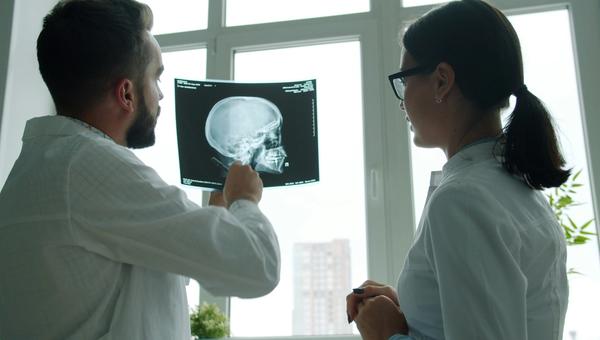
- Medical evaluations will clarify your health trajectory. Many crash injuries are invisible at first; you may feel fine immediately after a crash due to adrenaline and the need to address immediate issues after a crash, especially caring for others, only to discover that your head hurts, you’re struggling to remember words, and you feel deeply fatigued (classic symptoms of a traumatic brain injury). In other cases, an x-ray may reveal internal bruising or spinal misalignment that should be treated immediately.
- Your medical record matters more than you might realize. A medical record created right after the accident links your injuries to the crash. Waiting weeks to see a doctor gives an insurance company room to argue your injuries came from somewhere else.
- Oregon PIP benefits help cover it. Every Oregon auto policy includes Personal Injury Protection (PIP) coverage that pays for reasonable medical expenses regardless of who was at fault for one year after the crash. All Oregon drivers are required to carry at least $15,000 of PIP coverage.
After seeing a doctor and getting an evaluation, be sure to save every receipt, bill, prescription, and discharge instruction. Keep a folder, physical or digital, dedicated to your accident. A strong claim is a well-organized case. (This is one of the many benefits of working with a personal injury attorney: they will keep your records organized.)
Step 5: Report the Accident to the Oregon DMV
Oregon has a strict reporting rule that surprises a lot of drivers. Within 72 hours of a crash, you're required to file an Oregon Traffic Crash and Insurance Report with the DMV if one of the following conditions apply:
- At least one person was injured or killed.
- Damage to any vehicle exceeds $2,500.
- At least one vehicle was towed from the scene.
- Damage to non-vehicle property (a fence, building, mailbox or similar) exceeds $2,500.
This requirement applies even if the emergency personnel were already at the scene and filed a police report. If you don't file when required, the DMV can suspend your driver's license; that suspension stays in place until the report is submitted.
You can file online through DMV2U or download the form from the Oregon DMV website. Be sure to keep a copy for yourself.
Step 6: Notify Your Insurance Company
The next step is to call your own insurance carrier to report the crash; most policies require it. We recommend doing this after the above steps have been taken, and to have your documentation at the ready. When reporting, stick to the facts: where you were, when the accident happened, who was involved, and any medical information that pertains to the event.
When the other driver's insurance company calls, be careful about what you say. Adjusters are trained to ask friendly, open-ended questions designed to get statements they can use to reduce or deny your claim. You are not required to give a recorded statement to the other driver's insurer.
Here are a few guidelines to follow when speaking with insurance adjusters:
- We strongly recommend contacting a car accident attorney to assess the value of your claim before speaking with any insurance representative. Don't accept a quick settlement offer before you understand the full extent of your injuries.
- Don't sign a medical release if they ask you to do so; this gives the insurer access to your entire medical history, which they will use to discredit your claim.
- Don't try to downplay your injuries, even if you feel “fine,” or your injuries seem to be resolving on their own. In many serious medical cases, a car accident victim will have good days and bad days; if you are asked about your medical needs on a good day, be sure to explain how your symptoms come and go.
Step 7: Consult with a Personal Injury Attorney As Soon As Possible
The personal injury attorneys at Eder Sturm Eder are here to help after an Oregon car accident. An attorney can help provide clear succinct reporting to insurance to make sure insurance is not using information against you later when considering a settlement. An attorney can tell you what your rights are under the insurance policy, how much money is available to cover your losses and ensure you are covered under the policies
A consultation with Eder Sturm Eder costs you nothing, and can offer clarity on your legal options. It can help you incorporate:
- The full, fair value of your claim, including future medical care and lost earning capacity (and whether the insurance coverage is sufficient to meet these needs).
- Oregon's comparative negligence rules, which can affect how much you can recover if you are found to share liability for causing the accident.
- Oregon's two-year statute of limitations for personal injury claims (six years for property damage).
Eder Sturm Eder works on a contingency fee basis for personal injury cases; this means when you file a claim, you don't pay attorney fees unless we collect money on your behalf.
Insurance companies are in the business of paying as little as possible. Once you sign a release and accept a settlement, that case is closed—even if you later discover your injuries are more serious than you thought, or that the medical bills keep coming.
To work with a car accident attorney call us at (503) 227-4601, or reach out through our Contact page. The process is quick and confidential.
Frequently Asked Questions about Oregon Car Accident Cases
How long do I have to file a personal injury claim after a car accident in Oregon?
Generally, you have two (2) years from the date of the accident to file a personal injury lawsuit in Oregon. Property damage claims have a longer six-year window. Oregon’s statutes of limitations include exceptions that can shorten or extend these deadlines, including claims against public bodies, which require notice within 180 days. Your safest move is to speak with an attorney early.
Do I have to call the police after every car accident?
While Oregon doesn't require police involvement for minor crashes with no injuries, we strongly recommend calling the police to document the scene in case injuries later arise. A police report creates an objective record that protects you if the other driver later changes their story or claims injuries you didn't cause.
What if the other driver doesn't have insurance?
Oregon law requires every auto policy to include Uninsured Motorist (UM) and Underinsured Motorist (UIM) coverage. If the at-fault driver has no insurance — or not enough — your own UM/UIM policy may cover your injuries. These claims can be tricky because you're now negotiating against your own insurance company, which is one reason people often bring in an attorney for help.
Should I see a doctor if I feel okay after the crash?
Always get a medical evaluation after a car accident, even if you feel fine. Soft tissue injuries, concussions, and internal injuries often don't show symptoms for hours or days. A prompt medical evaluation protects your health and creates the documentation you'll need if your symptoms develop later.
How much does it cost to hire an Oregon car accident lawyer at Eder Sturm Eder?
For personal injury cases, we work on a contingency fee basis — you don't pay attorney fees unless we win your case. Your initial consultation is always free, with no pressure and no obligation. Call us at (503) 227-4601, or contact us online for a free case review.
What if I was partially at fault for the accident?
You may still be able to collect on your claim, even if you bear some responsibility for the accident. As long as you were 50% or less at fault, you can still recover compensation but the amount is reduced by your share of the fault. For example, if your damages total $100,000 and you're found 25% at fault, you'd recover $75,000. If you're found more than 50% liable, you cannot recover compensation for your injuries.
Does Oregon's PIP coverage apply even if the accident was my fault?
Yes, PIP (Personal Injury Protection) is a no-fault benefit built into every Oregon auto policy. It covers reasonable medical expenses, a portion of lost wages, and certain other costs regardless of who caused the crash, typically up to $15,000 in medical benefits for one year.
My injuries did not become serious until several weeks after the accident. What do I do?
You can still pursue a claim for compensation, up to two years after the accident, under Oregon law. However, the longer the gap between the crash and your medical treatment, the more an insurance company will argue that your injuries are unrelated. For this reason, always document everything, including when symptoms appeared, how they've progressed, and every medical appointment. In cases where symptoms appeared after your initial medical evaluation, you may want to work with an Oregon car accident attorney.
When is the right time to call an Oregon car accident lawyer?
We strongly recommend that you consult with an attorney as early as possible after a car accident, even if you end up resolving your case without one. Evidence disappears, witnesses become hard to reach, and insurance companies start building their case the moment a claim is filed. Speaking with a lawyer right away costs you nothing, and gives your case the best possible foundation.
Eder Sturm Eder: Trial-Tested. Proven Results.
A fender bender after a Ducks game, a commuter pile-up on the Terwilliger curves, a truck accident after a serious snowfall at Timberline Lodge… After more than 30 years as personal injury attorneys, Eder Sturm Eder has seen just about every Oregon car accident imaginable.
No matter where or how it happens, an Oregon car accident can be overwhelming. Medical appointments, missed work, and mounting medical bills can add to the stress of the situation, and make it difficult to focus on healing when you're also fighting paperwork.
For more than 30 years, Eder Sturm Eder has helped Oregonians through moments like these. We listen carefully, tell your story the right way, and we build every case like it's going to trial.
If you or someone you love has been hurt in a car accident, call Eder Sturm Eder for a free case evaluation: (503) 227-4601.

Lawyer
Joel is a recipient of Super Lawyers Rising Stars awarded to no more than 2.5% of attorneys since 2022. Joel has been nominated to the National Trial Lawyers top 40 attorneys under 40 since 2019 and in 2019 he was awarded University of Oregon School of Law Outstanding Young Alumni Award. Joel served as past Chair of the Oregon New Lawyers Division. He is a featured continuing legal education speaker on a variety of litigation topics including wrongful death cases, depositions and trial strategies. His presentations have been featured locally, through the litigation section of the Oregon State Bar and nationally. Joel was born and raised in Portland and became an attorney to advocate for a community he cares deeply about. This passion drives him to get the best results in every case. He worked for a major insurance company and was quickly entrusted to handle complex lawsuits worth millions of dollars ranging from motor vehicle accidents, insurance coverage and benefits disputes, property loss, premises liability, slip and falls, fire losses, construction defect and product liability claims. His passion for helping people inspired him to use his experience, in the courtroom and representing a large insurance company, to aid injured people in maximizing their recoveries in a way other lawyers cannot. Joel is an active member in the legal community serving in various positions within the Oregon New Lawyers Division including Chair of the Division. He is a featured continuing legal education speaker on a variety of litigation topics including wrongful death cases, depositions and trial strategies. His presentations have been featured locally, through the litigation section of the Oregon State Bar and nationally. He was recognized for his advocacy by receiving the 2019 University of Oregon School of Law Outstanding Young Alumni Award and was nominated to the National Trial Lawyers top 40 attorneys under 40 in 2019. Joel received his undergraduate degree from Gonzaga University and attended University of Oregon for law school. He is a huge fan of Gonzaga basketball, an ex-lacrosse player and he has a weakness for 1960’s soul ballads. Prior to starting his legal career, Joel and his wife Nanda were volunteers at a school in Peru where they started a sports program for elementary age students. Joel loves to cook for his wife and three kids, Neela, Bodhi and Zia.
Related Articles


Schedule a free consultation.
It's quick, confidential, and there's no obligation.
Need to speak with someone right away? Call (503) 227-4601