
Head-On Collisions in Oregon: A General Overview
In this blog, we discuss head-on collisions in Oregon: how these personal injury cases happen, the injuries they can cause, and how a personal injury attorney may be able to help you recover compensation for medical bills, wage loss and more. Speak with an Oregon Personal Injury Lawyer: (503) 227-4601
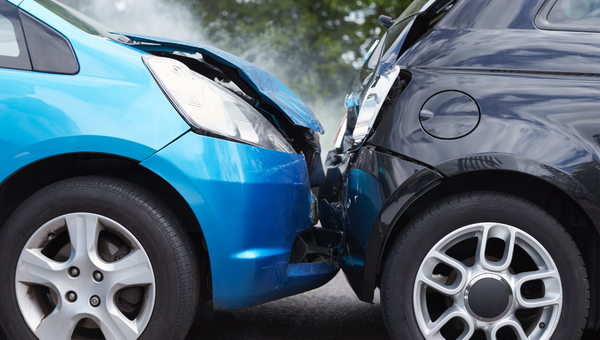
Head-on collisions are among the rarest crashes on Oregon and Washington roads, and yet they are the deadliest crashes that can happen. These collisions can happen on winding highways like Highway 26 to the coast, on mountain passes through the Cascades, and in town at intersections, on bridges, and on freeway off-ramps.
Establishing liability after a head-on crash is more complicated than it appears. Insurance claims may be denied based on fault (or unprovability). During an already-difficult time, your insurance company may deny your medical treatment, force you back to work, and push for early settlements that fall far short of what you are owed.
The Portland personal injury lawyers at Eder Sturm Eder represent people injured in head-on collisions across the states of Oregon and Washington. Schedule a free consultation online.
Head-On Collisions: Causes, Injuries, and Legal Considerations in Oregon Personal Injury Law
Common Causes of Head-On Collisions in Oregon
Our law firm has seen numerous types of head-on collisions all over the state of Oregon. While head-on collisions are often traceable to a single cause, sometimes more than one cause is a factor. Here are some of the most frequent reasons someone is in the wrong lane, leading to a front-to-front crash:
- Impaired Driving: Alcohol and drug impairment are the most common causes of head-on collisions, particularly wrong-way crashes on freeways.
- Distracted Driving: Texting, scrolling, and using in-car infotainment systems are recurring factors in centerline-crossing crashes.
- Drowsy and Fatigued Driving: Falling asleep at the wheel, even for a couple of seconds, frequently causes head-on crashes on long stretches of Oregon highway.
- Unsafe Passing: Drivers who attempt to pass without enough room on two-lane highways without divided lanes cause some of the most violent head-on crashes.
- Speeding and Reckless Driving: Excessive speed reduces a driver's control and increases the forces involved if a collision occurs.
- Weather and Road Conditions: Rain, snow, black ice, fog, and standing water can cause a driver to lose control and cross into oncoming traffic. Weather does not excuse the crash, but it is often part of the story.
- Mechanical Failure: Tire blowouts, steering failures, and brake failures can send a vehicle across the centerline. When the failure traces back to a defect, a product liability claim may be available.
- Road Design and Signage: Missing or unclear centerline markings, inadequate signage, poorly designed merges, and known dangerous intersections can contribute to head-on crashes. Government entities responsible for road maintenance may share liability.
Common Injuries in Oregon Head-On Collisions
Because the forces involved in a head-on collision are so much greater than in other types of crashes, the injury patterns are different, too. Beyond simple fractures and cuts, injuries are typically catastrophic and can include the following:
- Traumatic Brain Injuries: The sudden deceleration of a head-on impact causes the brain to strike the inside of the skull, often producing injuries with lasting cognitive, behavioral, and emotional changes. (See our brain injury practice page for more information.)
- Spinal Cord Injuries: Compression and rotation forces in a head-on collision can damage the cervical, thoracic, or lumbar spine. (Learn more on our spinal cord injury page.)
- Internal Organ Damage: The forces required to restrain a person at high impact can bruise or rupture organs. These injuries are common in head-on crashes and require urgent treatment.
- Amputations: In severe head-on crashes, crush injuries to the lower extremities or arms can require amputation, either at the scene or as part of long-term treatment.
- Burns: Fuel system damage and engine fires can cause burn injuries, particularly when a vehicle's occupants cannot escape quickly after the crash.
- Fatalities: Because head-on collisions are so often catastrophic, wrongful death claims are a regular part of this practice area. Surviving family members may be entitled to compensation.
Compensation Available in a Head-On Collision Claim
Oregon and Washington law allow injured drivers, passengers, and surviving family members to recover both economic and non-economic damages after a head-on collision. A full claim typically includes:
- Past and future medical expenses
- Lost wages and lost earning capacity
- Property damage
- Pain and suffering
- Emotional distress
- Loss of consortium
- Wrongful death damages
- Punitive damages
For more than 30 years, Eder Sturm Eder has helped Oregonians and Washingtonians through some of the worst moments of their lives. We listen carefully, investigate thoroughly, tell your story the right way, and build every case to achieve the best results possible. If you suffered a head-on collision, or lost a loved one in this way, please call us today for a free, confidential consultation: (503) 227-4601.
What to Do After a Head-On Collision
Head-on collisions are often serious enough that what happens at the scene is out of your hands. But if you’re able to take any of the following actions, they can help protect both your health and your legal claim:
- Call 911 immediately if you are able to do so.
- Accept transport to the hospital. Head-on crashes can cause internal injuries, concussions, and spinal damage that are not immediately obvious. A trauma evaluation creates the medical record you will need later.
- Document the scene if you safely can. If you are able, photograph the vehicles, the road, skid marks, debris, the position of the cars, traffic signs, and any visible injuries. Get the other driver's information and the names and phone numbers of any witnesses.
- Cooperate with law enforcement, but stick to the facts. Do not speculate, apologize, or guess at distances or speeds.
- Do not allow the other driver's insurer to take a recorded statement from you. Insurance companies train their adjusters to capture statements early and use them to limit payouts. You are not required to give one.
- Preserve everything. Save medical records, bills, treatment plans, pay stubs showing missed work, repair estimates, and anything else tied to the crash. Take notes about your symptoms as they develop.
- Talk to an Oregon or Washington car accident lawyer as soon as possible. In serious head-on collision cases, early legal involvement is critical because insurance companies start building their case immediately. Contact Eder Sturm Eder for a free case evaluation.
6 Facts About Head-On Collisions in Oregon and Washington
1. Head-on collisions are statistically the deadliest type of crash.
In front-to-front collisions, the impact is tremendous, even at lower speeds. The result is that head-on crashes regularly cause traumatic brain injuries, spinal cord damage, internal organ damage, amputations, and death.
National data consistently shows that head-on collisions account for roughly 2% of all crashes but nearly 14% percent of crash fatalities. In Oregon and Washington, head-on collisions are a leading cause of wrongful death claims arising from motor vehicle accidents.
2. Most head-on collisions trace back to a driver leaving their lane.
A head-on collision almost always means that one driver isn’t in the correct lane. Oregon and Washington laws account for drivers using the wrong side of a roadway, with the driver who left their lane presumed to be at fault.
Even with this presumption, however, establishing liability can be complicated. The following circumstances can muddy the waters when determining fault:
- Impairment
- Distraction
- Fatigue
- Mechanical failure
- Road hazards
- Medical emergency
Our experienced car accident lawyers know how to pull the necessary vehicle data, surveillance footage, cell phone records, and witness accounts that show what actually happened.
Speak with an Oregon Head-On-Collision Lawyer: (503) 227-4601
3. Multiple drivers and other parties can share fault.
The driver who crossed the centerline is the obvious defendant. But head-on collision claims often involve other responsible parties:
- A bar or restaurant that overserved an intoxicated driver
- An employer, when a commercial driver causes a head-on crash on the job, including truck and rideshare drivers
- A vehicle manufacturer, if a tire blowout, steering failure, or defective brakes caused the driver to leave their lane
- A government entity, when missing markings, inadequate signage, or a known hazard contributed to the crash.
Head-on collision injuries are catastrophic, and a single driver's minimum-limits insurance policy rarely covers the true cost of the accident. Identifying all responsible parties is vital.
Speak with an Oregon Car Accident Attorney: (503) 227-4601
4. Your own PIP, UM, and UIM coverage may be the most important coverage in your case.
Personal Injury Protection (PIP) coverage and uninsured and underinsured motorist (UM/UIM) coverage on your policy can be the difference between covering your medical care and not. Medical attention at a Level I trauma center like OHSU or Harborview can run through the at-fault party’s financial liability limits in a few hours.
We routinely identify UM/UIM coverage that clients did not know they had. In wrong-way crashes where the at-fault driver fled or was killed, UM coverage may be the only source of compensation available at all.
5. Oregon and Washington apply different comparative fault rules.
In Oregon, you can recover compensation in a head-on collision case as long as you were not more than 50 percent at fault, with your recovery reduced by your share of fault. By contrast, Washington applies pure comparative fault under RCW 4.22.005; even if you were 80 percent at fault, you can still recover 20 percent of your damages.
This difference is crucial because it changes how aggressively insurance companies will push to assign fault to you. Our team pushes back hard against those arguments and forces insurers to deal with the actual evidence.
6. You have a limited time to file a head-on collision claim.
In most Oregon car accident cases, you have two years from the date of the crash to file a lawsuit. In Washington, the deadline is three years. If the crash results in death, an Oregon wrongful death claim must be filed within three years.
Shorter deadlines of 180 days to one year apply when a crash involves a government vehicle or public entity. These quicker responses are necessary under the law when a government vehicle is part of a head-on crash or when poor road design or signage is in play. Contact Eder Sturm Eder to review your case today before deadlines expire.
Frequently Asked Questions About Head-On Collisions
Who is at fault in a head-on collision?
In almost every case, the driver who crossed the centerline or drove the wrong way is at fault. That said, multiple parties can share fault. Liability could attach to an employer, a bar, a vehicle manufacturer, or a government entity.
What if the at-fault driver was killed in the crash?
The at-fault driver's auto liability policy continues to cover the claim even after their death, and you may be able to make a claim against their estate. We have handled many cases where the at-fault driver did not survive.
What if the wrong-way driver who hit me fled the scene?
Uninsured motorist (UM) coverage applies to hit-and-run head-on collisions. These cases require careful investigation, but they are absolutely recoverable.
Do I have a claim if I was a passenger in a head-on collision?
Yes. Passengers almost never share fault in a head-on collision, and they typically have claims against any responsible party. Passengers can also tap their own PIP and UM/UIM coverage.
What if my injuries did not appear at the scene?
Adrenaline and shock can mask pain in the hours after a crash, and many injuries can take days to fully present. Delayed symptoms do not bar your claim, but they do make it important to seek medical care right away.
What if I was hit by a commercial vehicle, truck, or rideshare driver?
Commercial trucks, delivery vehicles, and rideshare drivers carry different insurance policies than private drivers. These cases also involve additional parties such as employers, contractors, and rideshare companies like Uber and Lyft. See our pages on truck accidents and commercial vehicle accidents for more.
Should I accept the insurance company's first settlement offer?
Be cautious. Early offers in head-on collision cases are almost always low and generally arrive before you know the full extent of your injuries and the full cost of your future care. Once you sign a release, you cannot come back for more compensation later. Talk to a car accident lawyer before signing anything.
How long do I have to file a head-on collision claim?
The sooner you can file a claim, the better. In Oregon, most personal injury claims must be filed within two years of the crash, while in Washington, the deadline is three years. Wrongful death claims in Oregon have a three-year deadline. If the claim is against a government vehicle or public entity, you typically have 180 days under Oregon law.
How much does it cost to hire a head-on collision lawyer?
At Eder Sturm Eder, we handle Oregon and Washington head-on collision cases on a contingent basis. There is no upfront cost to retain us, and you don’t pay us unless we win financial compensation for you. Schedule your free consultation at (503) 227-4601.
Eder Sturm Eder: Trial-Tested. Proven Results.
If you or someone you love has been hurt or killed in a head-on collision, call Eder Sturm Eder at (503) 227-4601 or contact us online for a free, confidential consultation. We represent injured drivers, passengers, and families throughout the Portland Metro area and across Oregon and Southwest Washington.

Lawyer
Joel is a recipient of Super Lawyers Rising Stars awarded to no more than 2.5% of attorneys since 2022. Joel has been nominated to the National Trial Lawyers top 40 attorneys under 40 since 2019 and in 2019 he was awarded University of Oregon School of Law Outstanding Young Alumni Award. Joel served as past Chair of the Oregon New Lawyers Division. He is a featured continuing legal education speaker on a variety of litigation topics including wrongful death cases, depositions and trial strategies. His presentations have been featured locally, through the litigation section of the Oregon State Bar and nationally. Joel was born and raised in Portland and became an attorney to advocate for a community he cares deeply about. This passion drives him to get the best results in every case. He worked for a major insurance company and was quickly entrusted to handle complex lawsuits worth millions of dollars ranging from motor vehicle accidents, insurance coverage and benefits disputes, property loss, premises liability, slip and falls, fire losses, construction defect and product liability claims. His passion for helping people inspired him to use his experience, in the courtroom and representing a large insurance company, to aid injured people in maximizing their recoveries in a way other lawyers cannot. Joel is an active member in the legal community serving in various positions within the Oregon New Lawyers Division including Chair of the Division. He is a featured continuing legal education speaker on a variety of litigation topics including wrongful death cases, depositions and trial strategies. His presentations have been featured locally, through the litigation section of the Oregon State Bar and nationally. He was recognized for his advocacy by receiving the 2019 University of Oregon School of Law Outstanding Young Alumni Award and was nominated to the National Trial Lawyers top 40 attorneys under 40 in 2019. Joel received his undergraduate degree from Gonzaga University and attended University of Oregon for law school. He is a huge fan of Gonzaga basketball, an ex-lacrosse player and he has a weakness for 1960’s soul ballads. Prior to starting his legal career, Joel and his wife Nanda were volunteers at a school in Peru where they started a sports program for elementary age students. Joel loves to cook for his wife and three kids, Neela, Bodhi and Zia.
Related Articles


Schedule a free consultation.
It's quick, confidential, and there's no obligation.
Need to speak with someone right away? Call (503) 227-4601