
Distracted Driving in Oregon: Laws, Penalties, and Injury Claims
Speak with a Distracted Driving Accident Attorney
A school bus driver glances down to read a text on NE Fremont. A teenager is texting while driving on E Burnside. A harried parent checks a map app in stop-and-go traffic on I-205. In milliseconds, traffic stops, a pedestrian steps off the curb, or an animal runs into traffic. The tragic result: a crash involving distracted driving.
Distracted driving is one of the most common, and preventable, causes of serious crashes on Oregon roads. According to the Oregon Department of Transportation, distracted-driving crashes injure thousands of people across the state every year. Many drivers are found to be on their phones at the time of the crash. Drivers aged 16-25 more frequently engage in this dangerous behavior.
A momentary lapse of focus on the driving task can result in medical bills, lost wages, and lasting pain for the person they hit. Insurance adjusters will work hard to minimize these claims’ value, and sometimes even hide the fact that their insured driver was distracted at the time of the accident. If you were injured by a distracted driver in Oregon or Washington, a personal injury claim may be the solution.
The distracted driving lawyers at Eder Sturm Eder represent people injured by distracted drivers across Oregon and Southwest Washington. Call our personal injury lawyers today to set up a free consultation: (503) 227-4601.
What Counts as Distracted Driving?
Distracted driving involves any instance where a driver’s attention is split between the driving task and something else, generally involving something in the car. We group distracted driving into three forms:
Visual Distracted Driving: taking your eyes off the road (reading a text, looking at a map, watching a video)
Manual Distracted Driving: taking your hands off the wheel (holding a phone, eating, reaching for something)
Cognitive Distracted Driving: taking your mind off driving (a phone conversation, an argument, daydreaming).
Most phone use involves all three at once; studies show that we simply cannot pay attention to the road and our phones at the same time. A driver reading a text at 55 mph travels the length of a football field essentially blind. That is why Oregon and Washington both treat handheld device use as a serious offense, and why a court may suspend the license of a distracted driver when their actions result in a crash.
Speak with a Distracted Driving Accident Attorney
Oregon's Distracted Driving Law: ORS 811.507
Oregon's primary distracted-driving statute is ORS 811.507, "Operating a motor vehicle while using a mobile electronic device." This statute explicitly states that it is illegal to drive while holding and using a mobile electronic device; this is inclusive of all cell phones, tablets, GPS units, laptops, or similar devices. Staying actively engaged while driving is a critical component of traffic safety.
The law applies whenever you are driving, and Oregon defines that broadly. Being stopped at a red light, a stop sign, or in stalled traffic does not make it legal to pick up your phone. The only time the rule does not apply is when you have pulled over and safely parked in a designated parking spot.
There are a handful of narrow exceptions:
- Hands-free use by drivers aged 18 and older (a single touch or swipe to activate or deactivate is allowed).
- Summoning emergency help when no one else is available to make the call.
- Operating a medical device (as defined in the statute).
- Certain on-duty uses by emergency responders, truck drivers, and similar operators acting within their work duties.
Drivers under 18 may not use any mobile device while driving, even hands-free.
Penalties under ORS 811.507
Oregon has steadily increased the penalties for distracted driving, and they escalate sharply with repeat offenses:
- First offense: a Class B traffic violation, with a maximum fine of $1,000.
- First offense that contributes to a crash: bumped up to a Class A traffic violation, with a maximum fine of $2,000.
- Second offense within 10 years: a Class A traffic violation.
- Third or subsequent offense within 10 years: a Class B misdemeanor, a criminal charge, carrying a minimum $2,000 fine and the possibility of up to six months in jail.
First-time offenders may be able to have the fine waived by completing an approved Distracted Driving Avoidance Course. Note that lawmakers have approved further amendments to ORS 811.507 that take effect in the coming years, so the specifics continue to evolve.
If you believe you have a personal injury case involving distracted driving, call Eder Sturm Eder at (503) 227-4601.
Washington's Distracted Driving Law: RCW 46.61.672
If your crash happened across the river in Vancouver, Camas, or anywhere in Washington, a different statute applies. RCW 46.61.672 — known as the "E-DUI" or "Driving Under the Influence of Electronics" law — bans nearly all handheld use of a personal electronic device while driving, including talking, texting, browsing, and watching video.
Like Oregon, Washington counts you as "driving" even while temporarily stopped at a light or in traffic. The fine is roughly $136 for a first offense and roughly $234 for a second or later offense within five years — and every citation is reported to your insurance company, which can drive up premiums.
Washington also has a separate "dangerously distracted driving" rule, RCW 46.61.673, covering non-electronic distractions like eating, grooming, or reading. It is a secondary offense, meaning an officer can only cite it after stopping you for something else.
How to Prove Distracted Driving
Distracted-driving evidence does not appear on its own, and can disappear quickly after an accident. Eder Sturm Eder starts by requesting phone records, along with dashcam and traffic-camera footage, often through a subpoena. We then locate and interview witnesses who saw the driver on their phone or other device. Forensic analysis of the subject phone can also show the exact keystrokes and applications in use at the time of the accident.
Our experienced Oregon car accident lawyers know how to lock down this evidence early, before the insurance company has a chance to argue your injuries were minor or your own fault. Call (503) 227-4601 today to begin your claim.
Common Injuries in Distracted Driving Crashes
Because a distracted driver often fails to brake before impact, these crashes tend to happen at full speed, producing more severe injuries than the average fender bender. Some injuries are obvious at the scene, while others take time to appear. For this reason, always follow through with medical care and be honest with your providers about every symptom you’re experiencing.
Common injuries include:
- Whiplash and cervical strain. These common injuries include symptoms like neck pain, stiffness, and headaches that often worsen over the first few days.
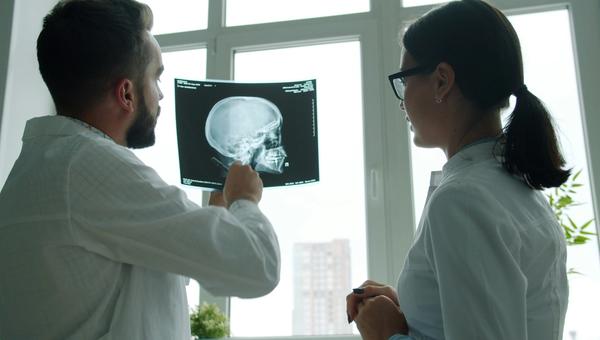
- Concussions and traumatic brain injuries. A sudden jolt can slam the brain against the skull even without a direct head strike, resulting in a traumatic brain injury.
- Herniated and bulging discs. The compression and rotation of a high-speed impact frequently damages the cervical and lumbar spine; these excruciating injuries can leave a person immobilized and weak.
- Spinal cord injuries. In severe crashes, spinal damage can occur. These catastrophic injuries can cause lasting weakness, numbness, or paralysis. Learn more about these cases on our spinal cord injury page.
- Fractures. Small breaks to the wrists, ribs, sternum, and facial bones are especially vulnerable at higher speeds. Larger bone breaks may also occur.
- Chronic pain and PTSD. Many crash survivors develop long-term pain or driving-related anxiety that affects work, sleep, and daily life.
Because distracted drivers do not see what is in front of them, pedestrians and bicyclists are at particular risk of catastrophic harm. If you have been injured in a car accident that you suspect involved distracted driving, call Eder Sturm Eder as soon as possible to protect the integrity of your claim: (503) 227-4601.
How Distracted Driving Crashes Happen on Oregon Roads
Most distracted-driving crashes trace back to a familiar set of behaviors. Recognizing them helps explain why fault almost always lands on the distracted driver.
- Texting and messaging. The most dangerous distraction, combining visual, manual, and cognitive impairment. Phone records and dashcam footage often tell the story.
- Talking on a handheld phone. Still common despite the law, and still a violation of ORS 811.507. (Most modern trucks are equipped with technology to allow drivers to communicate with their radio operators hands-free.)
- Using navigation and apps. Programming a map or changing music pulls eyes and hands off the task of driving.
- Social media and video. Scrolling or watching while driving is illegal in both Oregon and Washington. Each action dramatically increases crash risk.
- Eating, grooming, and reaching. Non-electronic distractions that can be just as dangerous, and that Washington addresses specifically under its dangerously-distracted-driving rule.
- Commercial and rideshare distraction. Commercial vehicle accidents, trucking accidents, and rideshare accidents involving distracted driving are tragically common. These occur when the driver is juggling apps, dispatch screens, and tight schedules.
Speak to a Distracted Driving Attorney in Oregon
Compensation Available in a Distracted Driving Injury Claim
Oregon and Washington both allow injured drivers, passengers, pedestrians, and cyclists to recover economic and non-economic damages. A full claim typically includes:
- Past and future medical expenses. ER visits, imaging, surgery, physical therapy, injections, prescriptions, and anticipated future care.
- Lost wages and lost earning capacity. Time missed from work, reduced hours, and the long-term impact on what you can earn.
- Property damage. Repair or replacement of your vehicle and other property damaged in the crash.
- Pain and suffering. Physical pain, loss of enjoyment of life, and the emotional toll of a serious injury.
- Emotional distress. Anxiety, depression, and PTSD that often follow a serious collision.
- Loss of consortium. Compensation for a spouse when injuries affect the marital relationship.
In cases involving especially reckless conduct, punitive damages may also be available. If a driver is found to be streaming video or filming themselves at the moment of impact, such damages may apply. Finally, if a distracted-driving crash takes a life, surviving family members may bring a wrongful death claim.
When the at-fault driver was driving a commercial vehicle, a delivery truck, or for a rideshare company, and on the clock at the time of the accident, their employer may also be liable. Larger insurance policies often come into play. To learn more, speak with a distracted driving attorney today.
Frequently Asked Questions About Distracted Driving in Oregon
Is it illegal to use my phone at a red light in Oregon?
Yes. Under ORS 811.507, you are still "driving" when stopped at a light, a stop sign, or in traffic. The law only allows phone use when you have pulled over and parked in a legal spot. Washington's E-DUI law works the same way.
Can I pursue my claim if the other driver was never ticketed for distracted driving?
Yes. A citation helps, but it is not required. Eder Sturm Eder can prove distraction through phone records, dashcam and traffic-camera footage, witness testimony, vehicle data, and the physical evidence of the crash itself.
How do you prove the other driver was on their phone?
We can prove distracted driving through several tools: a subpoena for the driver's phone and carrier records, dashcam or nearby surveillance footage, the police report and any admissions, eyewitness accounts, and data pulled from the vehicle's event recorder or the phone itself. We recommend acting quickly in such cases, as records and footage are routinely deleted or overwritten.
What if I was partly at fault?
You can still recover damages, but the amount will change based on the state. Oregon law states that you can still recover as long as you were not more than 50 percent at fault; your award will be reduced by your share of fault. Washington uses a more forgiving pure comparative fault rule, under which you can recover even if you were more than half at fault. Speak with a distracted driving accident attorney at Eder Sturm Eder for more details.
Does my own insurance pay before the at-fault driver's?
In Oregon, yes. Your own Personal Injury Protection (PIP) covers your medical bills and a portion of lost wages regardless of fault, and using it generally cannot raise your rates after a not-at-fault crash. If the distracted driver carries too little insurance or fled the scene, your uninsured/underinsured motorist (UM/UIM) coverage may fill the gap.
In Washington, it depends. PIP and UIM are not mandatory under Washington law. Speaking with a distracted driving attorney at Eder Sturm Eder may help you understand your insurance coverages.
How long do I have to file a claim?
In most Oregon injury cases, you have two years from the date of the crash to file a lawsuit, and wrongful death claims generally must be filed within three years. Shorter deadlines apply when a government vehicle is involved. Washington generally permits three years from the date of the accident. Evidence of distraction disappears fast; the sooner you act, the stronger your case will be.
My crash happened in Washington. Can you still help?
Yes. Eder Sturm Eder represents clients in both Oregon and Washington, including Vancouver, Camas, Longview, and the surrounding communities. Washington's distracted-driving law and fault rules differ from Oregon's, and we handle the specifics in both states. Contact us to discuss your case.
How much does it cost to hire a distracted driving accident lawyer?
We handle both Oregon and Washington distracted-driving cases on a contingency fee basis. There is no upfront cost, and you pay nothing unless we recover compensation for you. Consultations are always free.
If you have been injured by a distracted driver in Oregon or Washington, call Eder Sturm Eder at (503) 227-4601 or contact us online for a free, confidential consultation. We represent injured drivers, passengers, pedestrians, and cyclists across Oregon and Southwest Washington, including Portland, Beaverton, Hillsboro, Salem, Eugene, Bend, Vancouver, and the surrounding communities.

Lawyer
Joel is a recipient of Super Lawyers Rising Stars awarded to no more than 2.5% of attorneys since 2022. Joel has been nominated to the National Trial Lawyers top 40 attorneys under 40 since 2019 and in 2019 he was awarded University of Oregon School of Law Outstanding Young Alumni Award. Joel served as past Chair of the Oregon New Lawyers Division. He is a featured continuing legal education speaker on a variety of litigation topics including wrongful death cases, depositions and trial strategies. His presentations have been featured locally, through the litigation section of the Oregon State Bar and nationally. Joel was born and raised in Portland and became an attorney to advocate for a community he cares deeply about. This passion drives him to get the best results in every case. He worked for a major insurance company and was quickly entrusted to handle complex lawsuits worth millions of dollars ranging from motor vehicle accidents, insurance coverage and benefits disputes, property loss, premises liability, slip and falls, fire losses, construction defect and product liability claims. His passion for helping people inspired him to use his experience, in the courtroom and representing a large insurance company, to aid injured people in maximizing their recoveries in a way other lawyers cannot. Joel is an active member in the legal community serving in various positions within the Oregon New Lawyers Division including Chair of the Division. He is a featured continuing legal education speaker on a variety of litigation topics including wrongful death cases, depositions and trial strategies. His presentations have been featured locally, through the litigation section of the Oregon State Bar and nationally. He was recognized for his advocacy by receiving the 2019 University of Oregon School of Law Outstanding Young Alumni Award and was nominated to the National Trial Lawyers top 40 attorneys under 40 in 2019. Joel received his undergraduate degree from Gonzaga University and attended University of Oregon for law school. He is a huge fan of Gonzaga basketball, an ex-lacrosse player and he has a weakness for 1960’s soul ballads. Prior to starting his legal career, Joel and his wife Nanda were volunteers at a school in Peru where they started a sports program for elementary age students. Joel loves to cook for his wife and three kids, Neela, Bodhi and Zia.
Related Articles

Schedule a free consultation.
It's quick, confidential, and there's no obligation.
Need to speak with someone right away? Call (503) 227-4601